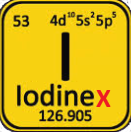
When you bite into a soft, perfectly shaped sandwich loaf or watch commercial dough rise evenly, you are witnessing the unseen work of iodine. As a raw material, calcium iodate and potassium iodate are essential functional additives in commercial baking and food processing—yet most consumers have never heard of them.
The Problem in Commercial Dough: Large-scale bakeries face challenges that home bakers do not. Flour quality varies by harvest, humidity fluctuates in factories, and dough must perform consistently after hours of automated mixing, shaping, and proofing. Without intervention, dough can become sticky, weak, or unpredictable.
The Iodine Solution: Potassium iodate (KIO₃) and calcium iodate (Ca(IO₃)₂) are classified as “dough conditioners” or “oxidizing agents.” They strengthen gluten proteins by oxidizing thiol (-SH) groups into disulfide (-S-S-) bonds. The result is a more elastic, resilient dough that:
· Handles higher water absorption (increasing yield)
· Resists over-mixing damage
· Produces finer, more uniform crumb structure
· Extends shelf life of finished bread
Why Not Just Use Vitamin C? Ascorbic acid (vitamin C) is another dough oxidizer, but it works slowly and requires enzymatic activation. Iodates work quickly and predictably, especially in high-speed continuous mixing systems used by industrial bakeries. They also perform better in frozen dough applications, where long storage degrades other conditioners.
Safety and Regulation: Iodates are approved as food additives in most countries (US FDA: 21 CFR 184.7; EU: E917) with strict usage limits—typically 10–50 ppm based on flour weight. At these levels, the residual iodine in finished bread is negligible and poses no health risk. During baking, most iodate converts to harmless iodide.
Raw Material Specifications: Food-grade calcium iodate or potassium iodate must meet FCC (Food Chemicals Codex) standards. Key requirements include:
· Assay: 99.0–101.0%
· Heavy metals: below 10 ppm
· Lead: below 1 ppm
· Arsenic: below 3 ppm
· Particle size: fine powder (passing 100 mesh) for even distribution
Packaging and Storage: Food-grade iodates must be packaged in food-safe, moisture-barrier containers (typically foil-lined bags inside fiber drums). They are stable at room temperature but should be kept away from reducing agents, organic materials, and strong acids.
Market Position: For suppliers, the food processing channel offers steady, non-cyclical demand. Bakeries buy iodates by the pallet, month after month. Quality consistency is valued more than price fluctuations. Once you earn a bakery’s trust, they rarely switch suppliers.
- The Bottom Line: Iodine in food processing is invisible but indispensable. It helps turn inconsistent flour into reliable, high-quality bread every single day.