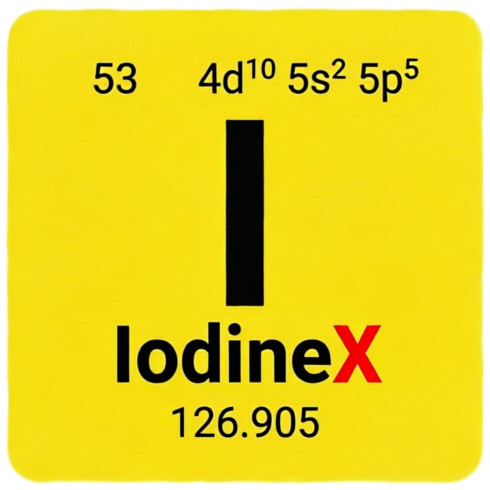
MATERIAL SAFETY DATA SHEET
Iodine (I₂)
According to GHS (Globally Harmonized System) and international chemical safety standards.
⚠️ Hazard Identification
Iodine is a toxic and corrosive substance.
- H312: Harmful in contact with skin.
- H332: Harmful if inhaled.
- H400: Very toxic to aquatic life.
- Inhalation: Severe irritation to nose, throat, and lungs; chest tightness, headache, pulmonary edema.
- Skin Contact: Irritation, burning, rash, and sensitization.
- Eye Contact: Severe irritation, redness, tearing, and corneal damage.
- Ingestion: Corrosive to the digestive tract; severe abdominal pain, diarrhea, nausea, vomiting.
🧪 Composition & Incompatibilities
Iodine reacts violently or dangerously with the following substances. Avoid contact with:
- Ammonia - Explosive reaction
- Acetylene - Explosive reaction
- Active metals (Aluminum, Potassium, Sodium, Zinc, Magnesium)
- Strong Reducing Agents
- Acetaldehyde
🚑 First Aid Measures
| Inhalation | Move person to fresh air. Give artificial respiration if not breathing. Get immediate medical attention. |
|---|---|
| Skin Contact | Remove contaminated clothing. Wash affected area with plenty of soap and water for at least 15 minutes. Get medical attention if irritation/burns occur. |
| Eye Contact | Rinse eyes with plenty of water for at least 15 minutes (lifting eyelids). Remove contact lenses if present. Get immediate ophthalmic medical attention. |
| Ingestion | If conscious, give 2-4 glasses of milk or water. NEVER give anything by mouth to an unconscious person. Do NOT induce vomiting. Get immediate medical attention. |
🔥 Fire Fighting & Accidental Release
Material is not flammable but is a strong oxidizer. Use SCBA (Self-Contained Breathing Apparatus) and full protective clothing. Toxic and corrosive fumes (Hydrogen Iodide - HI) are released in a fire.
Accidental Release Measures:- Use personal protective equipment (gloves, goggles, mask).
- Ventilate the area. Avoid creating dust.
- Cover spilled material with dry sand, dry earth, or soda ash.
- Collect in a closed container. Prevent entry into sewers or environment.
🛡️ Handling, Storage & Personal Protection (PPE)
Keep in a dry, cool, well-ventilated area, away from light, in tightly closed containers. Store away from combustibles, alkalis, active metals, ammonia, and reducing agents. Wash hands thoroughly after handling.
Exposure Limits:| NIOSH / OSHA (USA) | Ceiling: 0.1 ppm (1 mg/m³) |
|---|---|
| IDLH | 2 ppm |
- 🫁 RespiratoryAcid-gas respirator or SCBA
- 🧤 GlovesNeoprene, Nitrile, or Rubber (min. 0.11 mm)
- 👁️ Eyes/FaceChemical splash goggles + face shield
- 👕 BodyChemical-resistant protective clothing
🔬 Physical & Chemical Properties
| Appearance | Dark purple or gray crystalline solid with metallic luster |
|---|---|
| Odor | Pungent, irritating |
| Molecular Weight | 253.81 g/mol |
| Melting Point | 113.5 °C (236.3 °F) |
| Boiling Point | 184.4 °C (363.9 °F) - sublimes |
| Density | 4.93 g/cm³ |
| Vapor Pressure | 0.3 mmHg at 25 °C |
| Solubility in Water | Low (~0.3 g/L) |
| pH (saturated solution) | ~5.4 (weakly acidic) |
📦 Toxicology & Transport Information
| Acute Toxicity LD50 Oral (Rat) | 14,000 mg/kg |
|---|---|
| Acute Toxicity LD50 Oral (Mouse) | 22,000 mg/kg |
| Carcinogenicity | Not classified by IARC, NTP, or OSHA |
| UN Number | UN 1759 or UN 3495 |
|---|---|
| Hazard Class | Class 8 (Corrosive substances) |
| Packing Group | II (High hazard) or III (Medium hazard) |
♻️ Disposal Considerations
Iodine waste must be disposed of as hazardous chemical waste in accordance with local, national, and federal regulations.
Best method: Send to a licensed chemical waste disposal or recycling facility.
IMPORTANT NOTE: This is a summary. Always refer to the complete, current SDS provided by the specific manufacturer before handling any chemical.