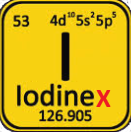
When you swallow a tablet, receive an injection, or undergo a medical scan, there is a good chance that iodine played a silent but essential role. The pharmaceutical industry is one of the largest consumers of high-purity iodine, and for good reason. No other element offers the same combination of safety, reactivity, and imaging properties.
The single largest pharmaceutical application of iodine is in X-ray contrast media. These are drugs injected into a patient’s bloodstream before a CT scan or X-ray. Iodine atoms are very dense and block X-rays effectively. When iodine-rich blood flows through arteries, veins, or organs, the contrast between these structures and surrounding tissue becomes crystal clear. Radiologists can then see blockages, tumors, aneurysms, and other abnormalities that would otherwise be invisible. Modern non-ionic contrast agents are remarkably safe. They contain multiple iodine atoms per molecule and are designed to be water-soluble and quickly eliminated by the kidneys. Without iodine, most advanced medical imaging would be impossible.
Beyond imaging, iodine is an essential component of many pharmaceutical products. Povidone-iodine is the gold standard antiseptic for preoperative skin preparation. It kills bacteria, viruses, and fungi within seconds but is gentle enough for use on mucous membranes. Thyroid medications like levothyroxine, taken by millions of patients daily, are simply synthetic thyroid hormones containing iodine atoms. Potassium iodide tablets are stockpiled by governments worldwide for nuclear emergencies. When taken after a radiation release, stable iodine saturates the thyroid gland and blocks the absorption of radioactive iodine-131, dramatically reducing cancer risk.
The purity requirements for pharmaceutical iodine are extremely strict. USP grade iodine must be at least 99.8 percent pure. Impurities like heavy metals, arsenic, chloride, and bromide are tightly controlled. Non-volatile residue cannot exceed 0.05 percent. Every batch must come with a Certificate of Analysis showing actual test results. Many manufacturers also require GMP compliance documentation and full traceability from the crude iodine source.
One challenge in this industry is the volatility of iodine supply. Since most iodine comes from Chile and Japan, pharmaceutical companies must maintain strategic stockpiles. A single disruption in supply can halt production of life-saving drugs. Smart buyers work with multiple qualified suppliers and keep safety stock covering several months of production.
The bottom line is simple. Iodine is not just a chemical raw material for the pharmaceutical industry. It is an irreplaceable tool that helps doctors see inside the human body, prevents infections, treats thyroid disorders, and protects populations from nuclear accidents. When you supply high-purity pharmaceutical iodine, you are not just selling a product. You are supporting modern medicine itself.