If you have never seen pure iodine, its appearance will surprise you. Unlike the brown liquid antiseptic most people know, pure iodine is a solid, blue-black crystalline material with a metallic shine. When you gently heat these crystals, they do not melt. Instead, they turn directly into beautiful purple vapor. This process is called sublimation, and it is one of iodine’s most fascinating chemical properties.
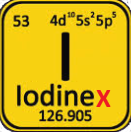
Iodine has the chemical symbol I and atomic number 53. It belongs to the halogen family, together with fluorine, chlorine, bromine, and astatine. Iodine is the heaviest and least reactive of the stable halogens, but it is still highly reactive compared to most other elements. The name iodine comes from the Greek word “iodes,” meaning violet-colored. It was discovered in 1811 by French chemist Bernard Courtois.
Unlike many industrial chemicals made from petroleum or natural gas, iodine is mined or recovered from underground brines. Interestingly, more than 99 percent of the world’s economically recoverable iodine is found in only two countries. Chile produces about 60 percent of global supply. There, iodine is extracted from caliche ore in the Atacama Desert. Japan produces about 35 percent, recovering iodine from underground brine water associated with natural gas fields. Smaller producers include the United States, Russia, Turkmenistan, and Indonesia. Although the name suggests iodine is rare, it is actually widely distributed in the earth’s crust. But concentrated, mineable deposits are scarce.
Why is iodine so valuable? First, supply is concentrated in two countries, creating geopolitical and natural disaster risk. Second, extraction is difficult. Chilean ore contains only 0.02 to 0.2 percent iodine, and the recovery process is complex. Third, many key applications of iodine have no practical substitute. These applications include polarizing films for LCD screens, contrast agents for medical X-rays, and certain chemical catalysts. Because of these factors, iodine prices typically range between 40 and 70 US dollars per kilogram.
In the raw material market, iodine is available in different purity grades. Crude or technical grade with 95 to 98 percent purity is used for general industrial applications. Industrial grade with 99.0 to 99.5 percent purity is used for catalysts and rubber stabilizers. Pharmaceutical grade meeting USP, EP, or BP standards requires 99.8 to 100.2 percent purity and is essential for drug manufacturing and contrast agents. The highest level is reagent or ACS grade with over 99.9 percent purity, used only in advanced laboratories and sensitive analysis.
Storing iodine requires careful attention. Because iodine sublimes at room temperature, it must be kept in tightly sealed containers made of HDPE plastic, glass, or Teflon. Ordinary metal containers will corrode. The storage area must be cool, below 25 degrees Celsius, and well ventilated. If you open a container, purple vapor is immediately visible and will irritate your eyes and throat. For this reason, iodine is classified as a hazardous material. Working with it requires gloves, goggles, and appropriate vapor protection.
In summary, iodine is a unique, fascinating, and strategically important raw material. Its scarcity, unusual chemistry, and irreplaceable role in critical industries make it a valuable and sometimes vulnerable link in global supply chains. Understanding what iodine is and how it behaves is the first step to sourcing it wisely and confidently.