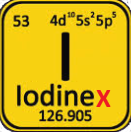
Every atom of iodine on Earth has a story that stretches back billions of years and across the universe. Iodine did not originate on our planet. It was forged in the hearts of dying stars and cataclysmic cosmic events long before the Sun or Earth existed. Understanding where iodine comes from is not just a fascinating scientific story. It also helps buyers appreciate why this raw material is so unique, why its supply is concentrated in specific regions, and why quality control matters at every step from mine to factory. For reliable access to pharmaceutical and industrial grades of iodine, visit iodinex.ir.
Part One: Cosmic Origins in Stellar Explosions
The heaviest elements in the universe, including iodine, are not created in ordinary stars like our Sun. Those stars fuse hydrogen into helium and eventually produce elements up to iron. But iodine is heavier than iron. It requires extreme conditions found only in rare and violent cosmic events.
Scientists have determined that iodine is primarily produced through a process called rapid neutron capture. This occurs when atomic nuclei capture neutrons very quickly, building up heavier and heavier elements before they have time to decay. The rapid neutron capture process can happen during violent collisions between two neutron stars, during collisions between a neutron star and a black hole, or during rare types of supernova explosions following the death of massive stars.
When these cosmic explosions occur, they release a cloud of newly formed elements into space. Among these elements are radioactive isotopes of iodine, particularly iodine-129, along with other heavy elements like gold, platinum, uranium, and curium. This stellar debris travels across the galaxy, eventually mixing with gas and dust clouds that will one day form new solar systems.
About 4.6 billion years ago, our solar system began to form from one of these clouds. The iodine atoms produced in those ancient stellar explosions were incorporated into the dust and gas that coalesced into the Sun, the planets, and ultimately the Earth. Every iodine atom you handle today is literally a piece of stellar history. Every atom of our bodies heavier than hydrogen and helium originated in the interior of a star, while atoms heavier than iron like iodine originated in supernova explosions or neutron star mergers.
Scientists have found evidence of this cosmic origin in meteorites. Some meteorites contain excess amounts of xenon-129, which is produced by the radioactive decay of iodine-129. This iodine-129 was present in the early solar system but has long since decayed away. Its presence in ancient meteorites proves that a supernova or neutron star merger injected freshly made iodine into the solar nebula just before our solar system formed.
Part Two: Geological Concentration on Earth
After Earth formed, iodine was distributed throughout the planet’s crust, but not evenly. Iodine is relatively rare compared to elements like oxygen, silicon, or aluminum. Most iodine exists in trace amounts, but certain geological processes have concentrated it into commercially viable deposits.
The key to iodine concentration is water. Iodine is highly soluble and mobile in aqueous environments. Over millions of years, rainwater and groundwater leached iodine from rocks and soils, carrying it into oceans. The oceans contain a very low concentration of iodine. But the total volume of seawater means the oceans hold an enormous quantity of iodine.
Marine organisms, particularly seaweed and algae, absorb iodine from seawater. Some seaweeds can concentrate iodine up to nearly ten thousand times the concentration in surrounding water. When these organisms die and sink to the ocean floor, their iodine-rich organic matter gets buried in sediments. Over geological time, heat and pressure transform these sediments into sedimentary rocks, and the iodine becomes trapped.
In some regions, additional geological processes have further concentrated iodine. In Japan, for example, iodine is found in high concentrations in underground brine water associated with natural gas fields. The iodine was liberated from marine organic materials during the generation of oil and gas, then traveled together with the oil and gas to current deposits. These brines can contain hundreds of parts per million of iodine, making them economically valuable.
In Chile, a different process created the world’s largest iodine deposits. The Atacama Desert was once covered by a shallow sea. As the sea evaporated, it left behind thick layers of nitrate and iodate minerals, including lautarite which is calcium iodate, and dietzeite which is calcium iodate chromate. Over millions of years, the extremely dry climate preserved these deposits, creating the caliche ore that is mined today.
Part Three: Human Discovery and Early Production
Although iodine had existed on Earth for billions of years, humans did not discover it until 1811. The discoverer was Bernard Courtois, a French chemist who helped run his father’s saltpeter business. Saltpeter, which is potassium nitrate, was essential for manufacturing gunpowder during the Napoleonic Wars.
The raw material for saltpeter production was seaweed ash, known as varec. Workers burned seaweed and washed the ash to extract potassium carbonate, which was then converted to saltpeter. One day in 1811, Courtois added too much sulfuric acid to the seaweed ash solution. To his surprise, a beautiful violet vapor rose from the mixture. As it cooled, this vapor condensed into dark, lustrous crystals on the sides of his container.
Courtois had discovered a new element, which he initially called substance X. He did not immediately publish his findings, but he shared samples with other scientists. In 1813, the British chemist Sir Humphry Davy, who was passing through Paris, recognized the substance as an element analogous to chlorine. He suggested the name iodine, from the Greek word ioeides, meaning violet-colored.
The discovery came at a fortunate time. After the Napoleonic Wars, Courtois’s saltpeter business failed. He turned to manufacturing iodine from seaweed instead. By 1820, the medicinal properties of iodine had become well known, and Courtois had become a commercial producer, though his business also eventually failed and he died in poverty.
Part Four: Modern Sources of Iodine
Today, iodine is produced from two main types of sources. About 60 percent of global production comes from Chile, where iodine is extracted from caliche ore as a byproduct of sodium nitrate mining. The ore contains only a small fraction of a percent of iodine, so processing requires large volumes of material. The ore is crushed and leached with water to dissolve the nitrates and iodates. Iodine is then precipitated from the solution using sulfur dioxide or other reducing agents, followed by purification and refining.
About 30 percent of global production comes from Japan, where iodine is recovered from underground brine water associated with natural gas fields. The brine is pumped to the surface, and iodine is displaced using chlorine or sulfuric acid. The iodine is then blown out of solution with air, absorbed in a reducing solution, and finally precipitated and purified.
Smaller producers include the United States from brines in Oklahoma, Russia, Turkmenistan, and Indonesia. Historically, iodine was also recovered from seaweed in Ireland, Scotland, France, Japan, Norway, and the Soviet Union, but this method is no longer economically competitive compared to mining and brine extraction.
Part Five: From Raw Material to Finished Product
After extraction, crude iodine typically has a purity of 95 to 99.5 percent. It is transported as a dark crystalline solid in sealed containers. From there, refiners produce various grades. Industrial grade at 99.0 to 99.5 percent purity goes to chemical synthesis, rubber stabilization, and industrial biocides. Pharmaceutical grade at 99.8 to 100.2 percent purity requires additional refining steps, often including resublimation where iodine is vaporized and recondensed to leave impurities behind.
For manufacturers of povidone iodine and Betadine products, the journey continues as iodine is complexed with polyvinylpyrrolidone to create a stable, sustained-release antiseptic. You can explore production and supply options for these derivatives at pvpi.ir.
Conclusion: Why Origin Matters for Buyers
Understanding the origin of iodine helps buyers appreciate several important facts. Iodine is a finite resource formed in cosmic events billions of years ago. It cannot be synthesized economically from other elements. Its global supply is concentrated in two countries, creating geopolitical and natural disaster risk. The extraction process is complex and energy intensive, which contributes to iodine’s relatively high price and price volatility.
When you source iodine from a reputable supplier, you are not just buying a chemical. You are accessing a rare element with a remarkable journey across the universe and through geological time. Treat it with the respect it deserves. Visit iodinex.ir for high quality iodine raw material production and sales. For povidone iodine and Betadine related products, visit pvpi.ir.