If you have never seen pure iodine, its appearance may surprise you. It is not a brown liquid (that is the diluted antiseptic). In its raw material form, iodine is a dense, blue-black crystalline solid with a metallic sheen. When gently heated, it produces a beautiful violet vapor—no liquid phase in between. This ability to sublimate (solid to gas) is one of iodine’s most distinctive properties.
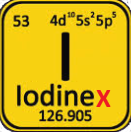
The Basics: Iodine (chemical symbol I, atomic number 53) belongs to the halogen family, alongside fluorine, chlorine, bromine, and astatine. It is the heaviest of the stable halogens and the least reactive—though “least reactive” in this family still means highly reactive by normal standards. Discovered in 1811 by French chemist Bernard Courtois, iodine gets its name from the Greek iodes, meaning “violet-colored.”
Where Does Iodine Come From? Unlike most industrial chemicals manufactured from petroleum or natural gas, iodine is mined or extracted from natural brines. Over 99% of the world’s economically recoverable iodine is found in just two countries:
· Chile (about 60% of global production): Extracted from caliche ore, a nitrate-rich deposit found in the Atacama Desert. Iodine is a byproduct of sodium nitrate mining.
· Japan (about 35% of global production): Recovered from underground brine water associated with natural gas and oil fields. The brine is pumped to the surface, and iodine is displaced using chlorine or sulfuric acid.
Smaller producers include the United States (brines from Oklahoma), Russia, Turkmenistan, and Indonesia. Despite its name, iodine is not particularly rare—it ranks 60th in crustal abundance—but concentrated, mineable deposits are scarce.
Physical and Chemical Properties That Matter for Buyers:
Property Value Why It Matters
Appearance Blue-black crystals, metallic luster Visual quality check
Melting point 113.7°C (236.7°F) Low enough for melt processing
Boiling point 184.3°C (363.7°F) Sublimes easily; requires sealed storage
Density 4.93 g/cm³ Heavy; 1 liter of crystals weighs nearly 5 kg
Solubility in water 0.34 g/L (poor) Requires KI or alcohol for solution
Vapor pressure Significant at room temperature Explains sublimation and loss
Why Is Iodine Valuable? Several factors drive iodine’s relatively high price ($50–90 per kg in recent years):
1. Concentrated supply: Two countries control nearly all production, creating geopolitical and natural disaster risk.
2. Difficult extraction: Chilean caliche contains only 0.02–0.2% iodine. Processing requires complex leaching and blowing-out operations.
3. No synthetic alternative: Unlike many chemicals, iodine cannot be cost-effectively manufactured from other elements. What comes from the ground is what exists.
4. Irreplaceable applications: For polarizing films, X-ray contrast media, and certain catalysts, no substitute matches iodine’s performance.
Common Commercial Forms: As a raw material buyer, you will encounter iodine in several physical forms:
· Crude iodine crystals: Irregular particles, typically 1–10 mm size. Suitable for industrial use where high purity is not critical.
· Refined iodine prills: Small, uniform spherical pellets. Flow better, dust less, and dissolve more predictably.
· Iodine resublimed: Highest purity (99.9%+), produced by vaporizing and re-condensing iodine. Required for pharmaceutical and analytical applications.
· Iodine solution: Dissolved in alcohol or potassium iodide solution for ready-to-use applications.
Grades and Purity Levels:
Grade Purity Typical Applications
Crude/Technical 95–98% Low-end industrial, animal feed
Industrial 99.0–99.5% Catalysts, rubber stabilizers, some biocides
Pharmaceutical (USP/EP/BP) 99.8–100.2% Human drugs, X-ray contrast, high-end biocides
Reagent/ACS 99.9%+ Analytical chemistry, research
Safety and Handling: Iodine is classified as hazardous (GHS05, GHS07). Key risks include:
· Corrosive to skin and eyes: Direct contact causes chemical burns.
· Toxic by inhalation: Iodine vapor irritates lungs and mucous membranes.
· Harmful if swallowed: As little as 2 grams can cause serious poisoning.
· Reactivity: Incompatible with reducing agents, ammonia, metal powders, and strong bases.
Proper personal protective equipment (gloves, goggles, vapor respirator) and ventilation are non-negotiable. Spills should be treated with sodium thiosulfate solution (which neutralizes iodine to harmless iodide).
Storage Best Practices:
· Sealed, corrosion-resistant containers (HDPE, glass, or PTFE-lined)
· Cool (below 25°C), dry, well-ventilated area
· Away from reducing agents, organic materials, and strong bases
· Regular inventory checks for vapor loss (visible as purple crystals forming on container lids)
The Bottom Line: Iodine is a unique, irreplaceable raw material with fascinating chemistry and critical industrial importance. Its scarcity, specialized production, and irreplaceability in key applications make it a valuable—and sometimes vulnerable—link in global supply chains. Understanding what iodine is and how it behaves is the first step to sourcing it wisely.