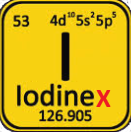
Povidone iodine, commonly known as PVP-I or Betadine, is one of the most widely used antiseptics in the world. It is found in surgical scrubs, wound care products, hospital disinfectants, and veterinary preparations. Understanding the production process helps buyers appreciate the quality control requirements and why sourcing matters. For reliable access to high quality PVP-I and povidone iodine, visit pvpi.ir.
What Is Povidone Iodine?
PVP-I is not a simple chemical compound. It is a loose complex of elemental iodine with polyvinylpyrrolidone, commonly known as PVP or povidone. The PVP acts as a carrier and solubilizer. It traps the iodine and releases it slowly over time, which reduces tissue irritation compared to pure iodine while maintaining antimicrobial effectiveness. A typical commercial PVP-I product contains about 10 percent available iodine, meaning the iodine that can be titrated and is active as a disinfectant.
The Chemistry Behind the Complex
The formation of PVP-I involves two main chemical steps. First, iodine must be made available in a reactive form. In many production methods, this is achieved by reacting potassium iodide with potassium iodate in an acidic solution. The reaction produces elemental iodine. Once free iodine is generated, it reacts with the PVP polymer. The iodine molecules align along the polymer chain and form coordinate bonds with the oxygen atom of the pyrrolidone ring. The result is a stable complex where the iodine is held but can be released when diluted with water or applied to skin.
The Two Main Production Methods
There are two primary industrial methods for manufacturing PVP-I: the solid phase heating method and the solvent method. Each has distinct advantages and is suited to different scales of production.
The Solid Phase Heating Method
This is the most common method for large scale production because it is simple, cost effective, and avoids the use of organic solvents. The process begins with two raw materials: polyvinylpyrrolidone K30 powder and elemental iodine. The ratio is typically around 85 percent PVP to 15 percent iodine by weight.
The materials are loaded into a sealed solid phase reactor. The reactor is closed tightly because iodine is volatile and will sublime away if not contained. The reactor is then rotated slowly for about 30 to 40 minutes to mix the powders uniformly.
Next, the mixture is heated gradually. Typical temperatures range from 70 to 80 degrees Celsius. The reaction is held at this temperature for 15 to 17 hours. During this time, the reactor continues to rotate, often cycling forward and reverse every 10 to 15 minutes, to ensure even heating and complete reaction.
After the heating period, the reactor is allowed to cool. The contents are discharged and sieved to obtain the final PVP-I powder. The product appears as a yellow brown to reddish brown amorphous powder.
Some manufacturers use a multistage gradual heating profile instead of a single temperature hold. For example, the temperature may be raised stepwise from 40 to 45 degrees Celsius, then to 50 to 55 degrees, then to 60 to 70 degrees, and finally to 80 to 85 degrees. This approach can improve product stability and reduce total reaction time.
The Role of Water Content in PVP
An important factor in PVP-I production is the water content of the PVP powder. PVP is hygroscopic and naturally contains some moisture. If the PVP is too dry, the reaction with iodine proceeds slowly and may not go to completion. If it contains too much water, the final product can become sticky or clumpy.
Optimal water content for PVP K30 used in PVP-I production is typically between 6 and 8 percent. Some manufacturers pre humidify their PVP by storing it in a humidity controlled environment for several hours before use. Others rely on the natural moisture content of the PVP as received from the supplier.
The Solvent Method
The solvent method is less common in large scale production because it requires organic solvents that must be recovered and managed. However, it can produce a purer product in some cases.
In this method, PVP and iodine are dissolved together in a solvent such as ethanol, methanol, or isopropanol. The mixture is heated and stirred until the complex forms. The solvent is then removed by evaporation or distillation, leaving behind the PVP-I solid.
The solvent method allows better control over the reaction conditions and can produce a more uniform product. However, the higher cost and environmental concerns associated with solvent handling make it less attractive for bulk manufacturing.
Optimization of Reaction Conditions
Several main factors significantly affect the yield and quality of PVP-I. These include pH, temperature, stirring speed, and reaction time.
The pH of the reaction mixture is particularly important. PVP-I formation is favored in acidic conditions, with optimal pH typically between 1 and 4. At higher pH values, the complex forms more slowly and the final product may have lower available iodine content.
Temperature also plays a critical role. Higher temperatures speed up the reaction but can also cause iodine loss through sublimation. The optimal range is generally between 40 and 70 degrees Celsius, depending on the specific method used.
Stirring speed affects how uniformly the iodine is distributed throughout the PVP. Faster stirring promotes better mixing but can also generate heat and potentially damage the PVP polymer chains. A balance must be struck.
Reaction time must be sufficient for the iodine to fully complex with the PVP. Too short a time leaves uncomplexed iodine that can sublimate away during storage. Too long a time does not improve yield and wastes energy. The typical range is 15 to 20 hours for solid phase methods.
Quality Control and Testing
After production, every batch of PVP-I must be tested to ensure it meets specifications. The most important test is the determination of available iodine content. This is done by iodometric titration with sodium thiosulfate, the same method used for elemental iodine assay. Commercial PVP-I typically contains 9 to 12 percent available iodine.
Other quality tests include measurement of iodide content, pH of a solution, heavy metals, loss on drying, and residue on ignition. The product must also pass microbial limits testing.
Stability is another critical parameter. PVP-I can lose available iodine over time, especially if stored improperly. Good manufacturing practice requires stability studies to establish an expiration date. Properly manufactured PVP-I stored in sealed containers away from light and heat can remain stable for 36 months or longer.
Applications of PVP-I
The finished PVP-I powder is formulated into various products. It can be dissolved in water to make solutions for skin disinfection. It can be incorporated into ointments, creams, and gels for wound care. It is also used in surgical scrubs, mouthwashes, and vaginal preparations.
The broad spectrum antimicrobial activity of PVP-I covers bacteria, viruses, fungi, and some spores. It remains effective in the presence of blood and other organic matter, which is a key advantage over some other antiseptics.
Conclusion
The production of povidone iodine is a carefully controlled process that combines polymer chemistry with iodine complexation. Whether produced by the solid phase heating method or the solvent method, the final product must meet strict quality standards to ensure safety and effectiveness. For manufacturers of healthcare products, sourcing high quality PVP-I from a reliable supplier is essential. For production and supply of povidone iodine and Betadine related products, visit pvpi.ir.